
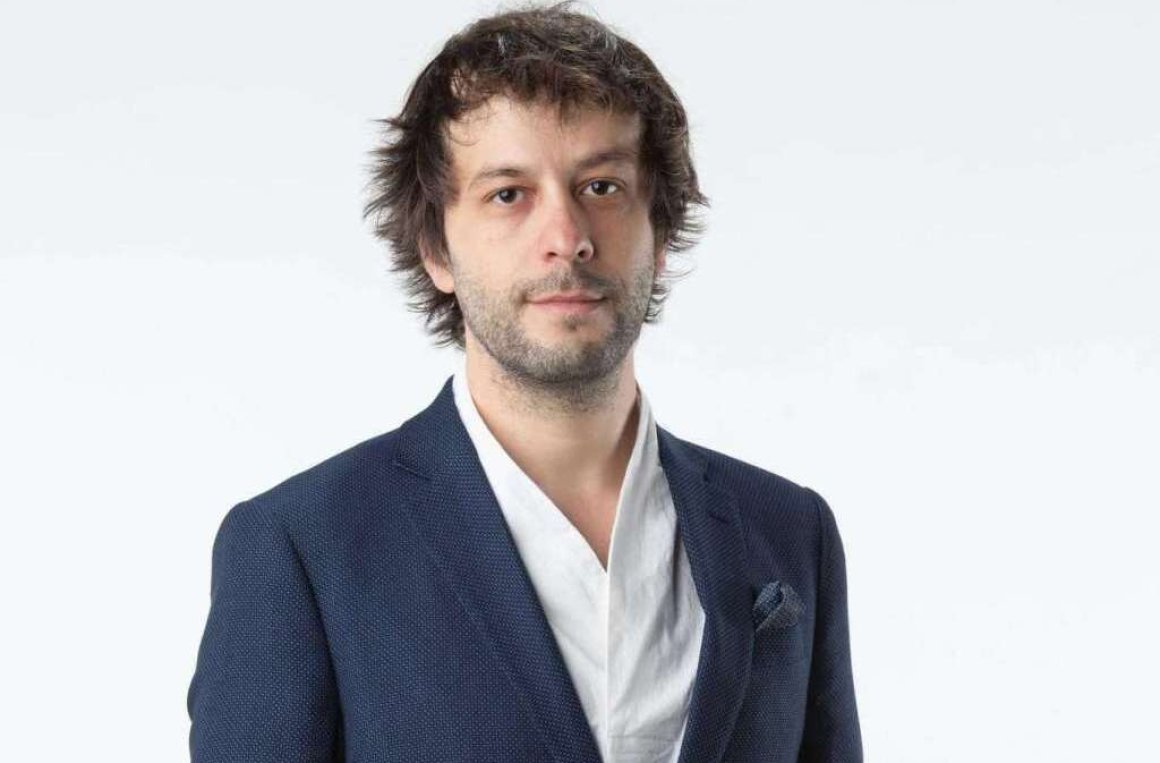
Roberto Alonso Trillo
Roberto Alonso Trillo is a theorist and artist whose work spans cultural theory, media philosophy, and experimental sound. Based in Hong Kong, his research engages the aesthetic and political dimensions of machine learning, with particular attention to infrastructural critique and performativity. In ongoing collaboration with Marek Poliks, he investigates AI theory and speculative design as part of a broader inquiry into automation and cultural production. His interdisciplinary practice extends into sound art, post-instrumental music, and critical pedagogy.
Interplay Goes Dark
Every interplay runs on a shared representation, one carrying enough information for accurate execution, a common interface between a system’s components. Music computing’s shared forms have migrated from notation to MIDI, gesture-to-sound mappings, latent spaces, and model weights. In a forthcoming paper (Poliks et al. 2026) we name the endpoint darkness: neither secrecy nor illegibility, but the decorrelation of information from utility. A latent vector is fully disclosed and useless; it supports neither prediction, audit, nor steering, and the research field now retrofitting legibility onto it, one probe at a time, only confirms the diagnosis: every probe is another model we must trust to read on our behalf.
Two consequences concern this community. First, where reading fails, projection begins: some of what we celebrate as shared creativity is apophenic projection. And second, the instrument stops being an epistemic tool: it once carried the knowledge of its own use but now concealment may be inherited from training. The counter-agenda is already in this year's program: mappings a performer can rewrite in performance, agents that visualize intent before acting, generation that answers instructions in real time. Interplay has a specifiable requirement: a representation everyone in the loop can still read. Which of our systems meet it, and for how long?